Precision Psychiatry by Reading and Rewriting Brain Circuits
Mental disorders remain among the leading causes of disability worldwide, yet clinical diagnosis and treatment selection still rely largely on symptom-based criteria. Recent advances in neuroimaging and machine learning have opened new opportunities to develop objective brain-circuit biomarkers that characterize the neural mechanisms underlying psychiatric disorders and guide individualized treatment.
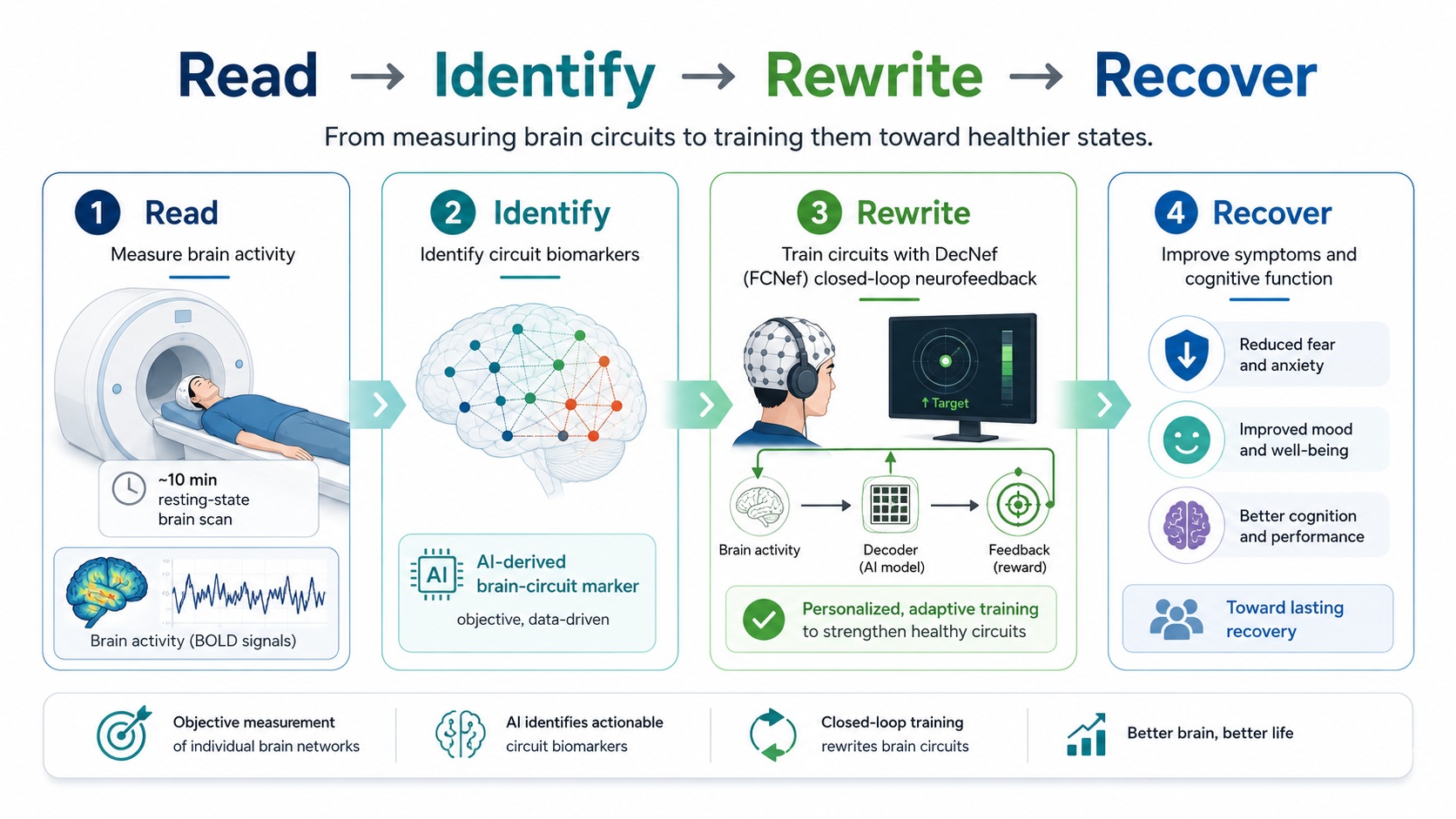
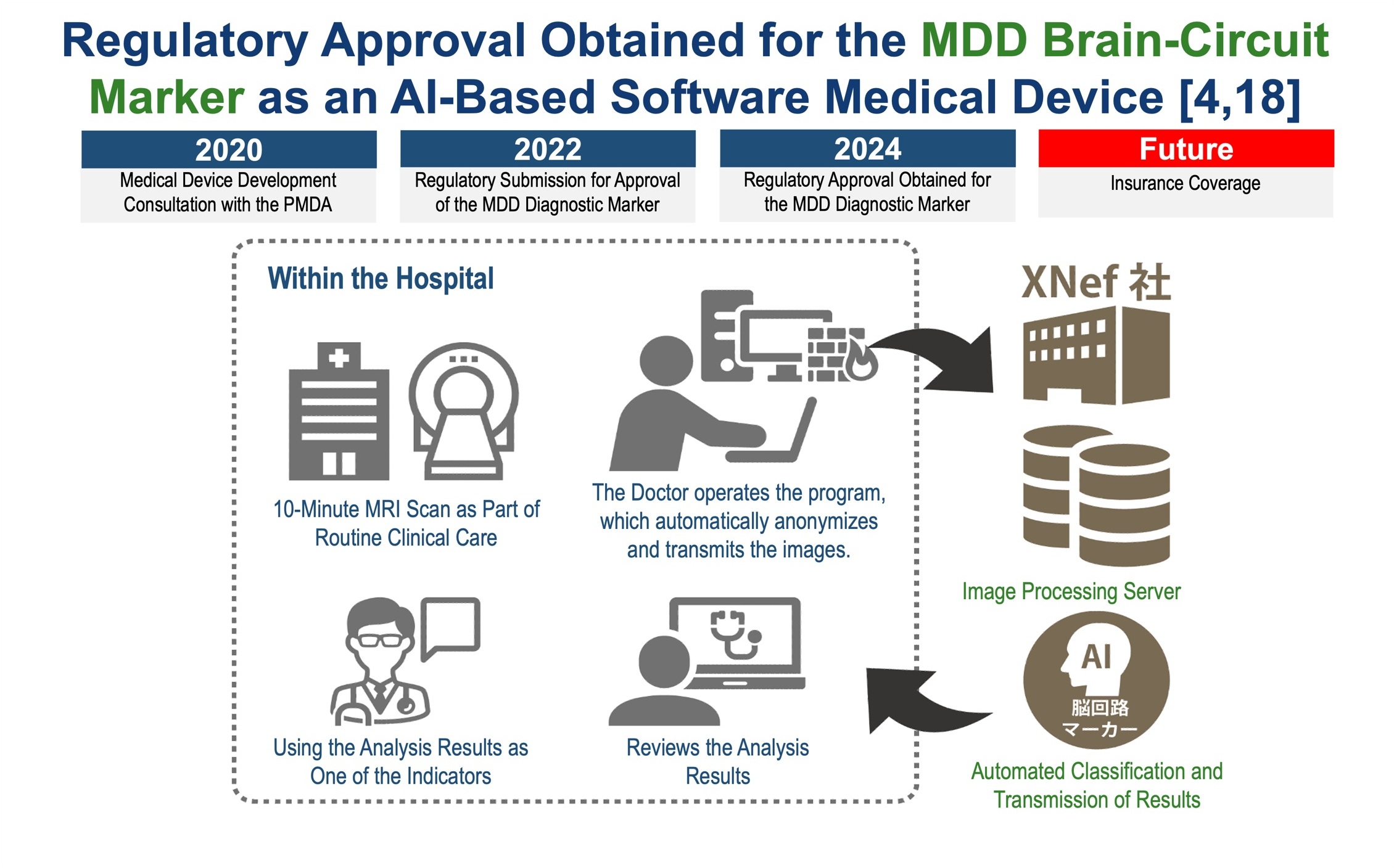
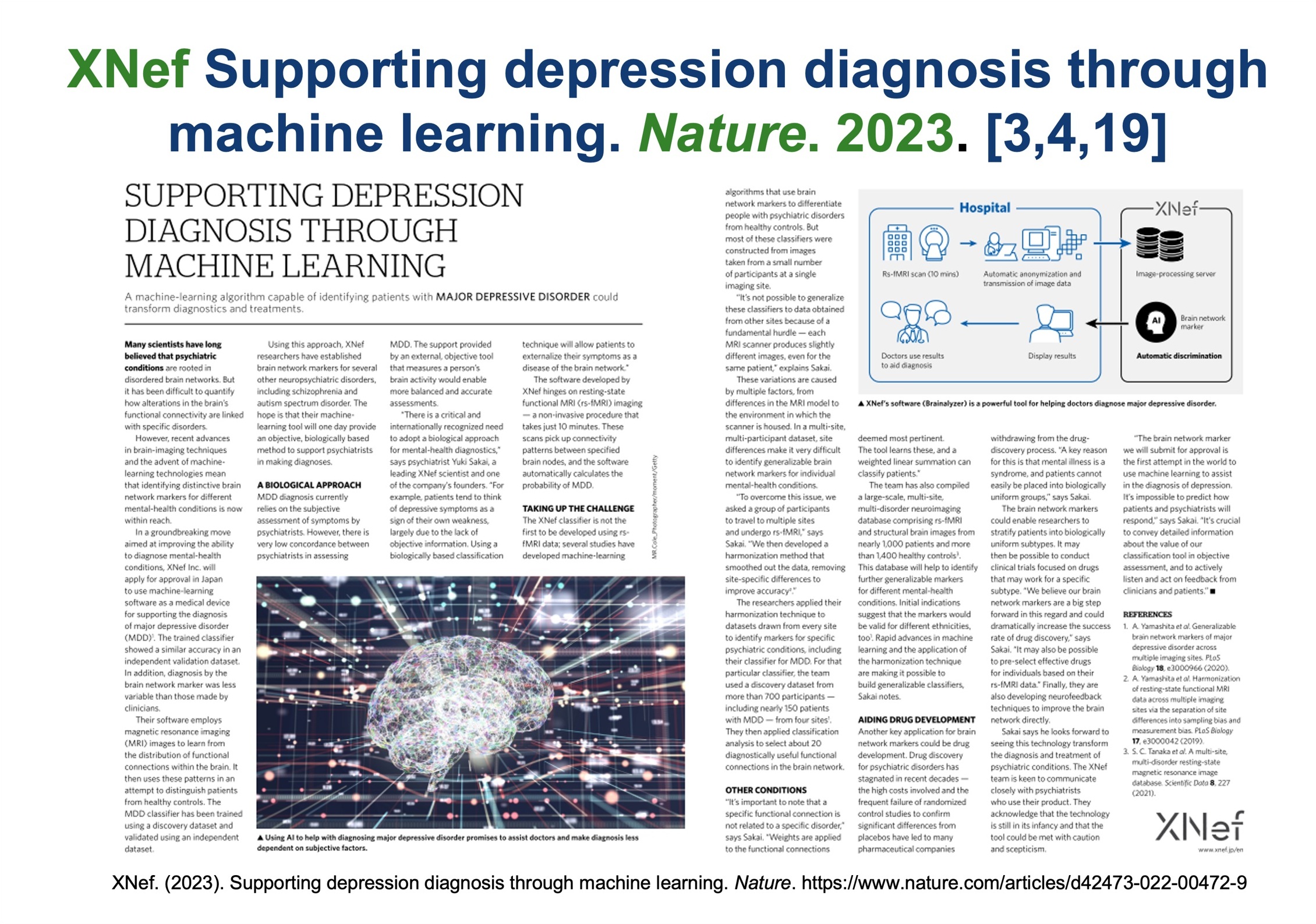
First, we briefly outline our efforts toward brain-circuit precision psychiatry by integrating artificial intelligence, computational neuroscience, neuroimaging, and neurofeedback. We have developed resting-state functional connectivity biomarkers for several psychiatric disorders, including major depressive disorder, schizophrenia, and autism spectrum disorder [1-5]. These biomarkers have demonstrated robust generalizability across imaging sites and populations [1,3,4], and one [4] has received regulatory approval in Japan as a software as a medical device. Beyond improving diagnosis, these biomarkers can characterize the neural circuits underlying symptoms and cognitive functions, stratify patients into biologically homogeneous subtypes, and support personalized treatment selection [2,6].
Building upon these biomarkers, we have developed Functional Connectivity Neurofeedback (FCNef) and Decoded Neurofeedback (DecNef), which enable participants to modify targeted brain circuits without explicit cognitive strategies [7,8]. Clinical studies have demonstrated promising therapeutic effects in depression, schizophrenia, post-traumatic stress disorder, and specific phobia, including double-blind randomised controlled trials for anxiety-related disorders [9,12-14]. These studies illustrate how objective biomarkers can be directly linked to personalised circuit-based interventions.
Finally, we present the emerging framework of brain-circuit precision psychiatry, in which biomarkers are used not only for diagnosis and patient stratification but also for selecting, optimizing, and monitoring individualized interventions. Our long-term vision is to establish state-dependent, closed-loop interventions that dynamically interact with ongoing brain dynamics to maximize therapeutic efficacy. This integrated framework may accelerate the translation of neuroscience into practical treatments and provide a foundation for next-generation precision mental healthcare.
1. Overview
Precision Psychiatry by Reading and Rewriting Brain Circuits
A non-invasive, AI-guided platform designed to identify dysfunctional brain circuits and train the brain toward healthier patterns—without drugs, implants, or conscious exposure to distressing memories.
Mental health care still relies primarily on symptoms and trial-and-error treatment. Our programme integrates multisite brain imaging, machine learning, and advanced neurofeedback to create a continuous pathway from objective brain-circuit measurement to personalised intervention. Developed through decades of research led by Mitsuo Kawato at ATR and translated toward clinical use by XNef, the platform combines generalisable brain-network biomarkers [1-5] with Decoded Neurofeedback (DecNef) and Functional Connectivity Neurofeedback (FCNef) [7,8].
The goal is not to replace clinicians. It is to provide clinicians and patients with additional tools to identify neural circuits associated with symptoms, stratify biologically heterogeneous patient groups, select more appropriate care, and directly train selected circuits toward healthier states [2,6, 9-14].
2. The Innovation & Novelty
From observing the brain to causally changing it
Conventional neuroimaging reveals associations between brain activity and behaviour, but association alone does not establish causality. Kawato proposed “manipulative neuroscience”: a human-neuroscience framework in which a precisely defined brain state is induced and the resulting behavioural or clinical change is measured [15].
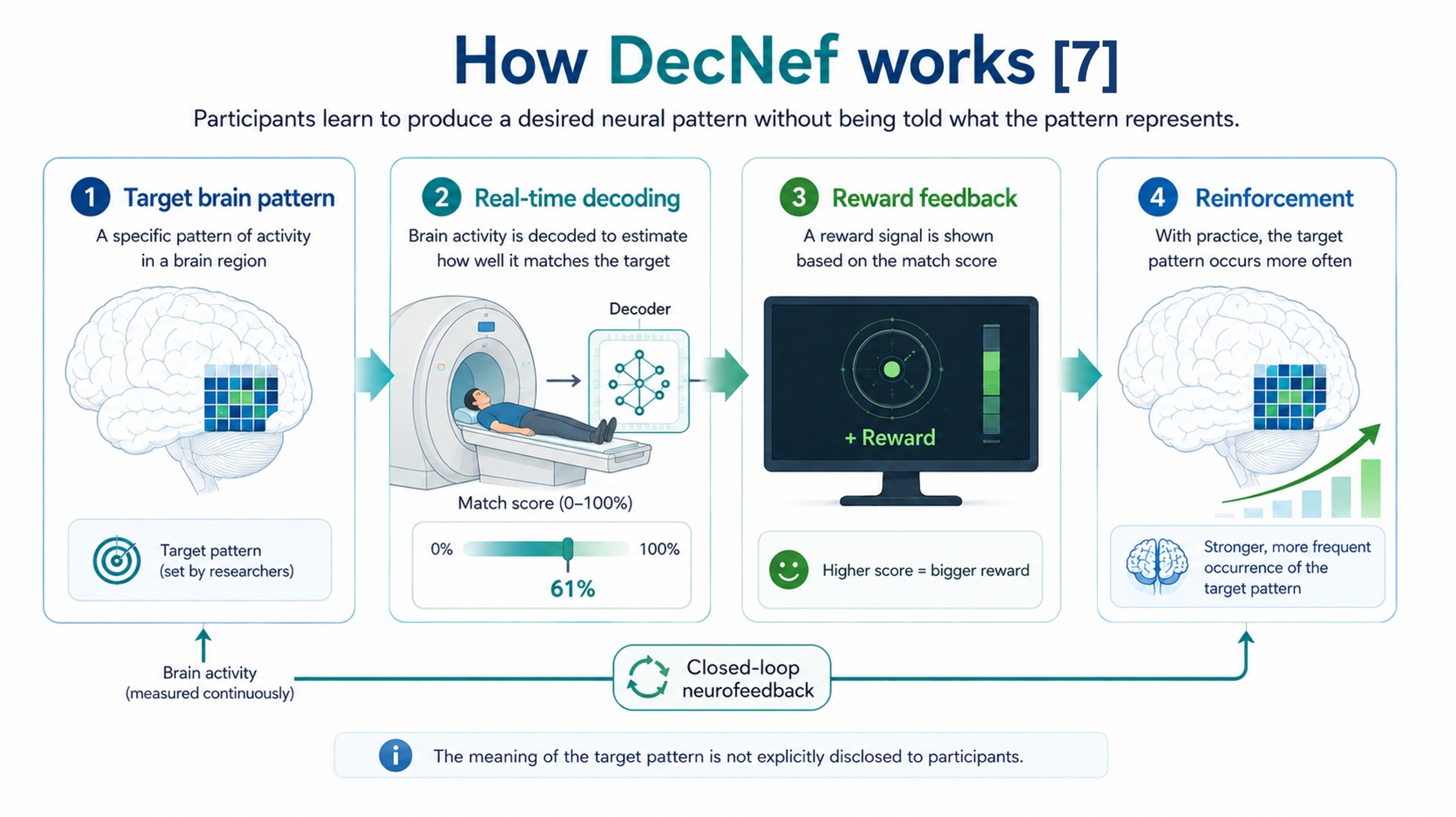
DecNef combines multivoxel fMRI decoding, real-time feedback, spontaneous brain activity, and reinforcement learning. A machine-learning decoder estimates how closely a participant’s current brain pattern matches a target information. Feedback is linked to that estimate while the participant remains unaware of the neural representation being reinforced. The original demonstration showed that repeatedly inducing a target pattern in early visual cortex was sufficient to produce perceptual learning without presenting the trained visual stimulus [7].
FCNef extends the same principle from local activity patterns to interactions between distributed brain regions. It measures functional connectivity in real time and rewards movement of a selected circuit toward a desired dynamics. Training can produce durable changes in intrinsic functional networks [8].
A theranostic brain-circuit platform
The innovation is not a single algorithm or device. It is an integrated theranostic platform that uses the same biological level—the brain circuit—for measurement, stratification, target selection, intervention, and response monitoring [2, 6, 9-14]. This creates a new clinical logic: identify the circuit associated with a person’s symptoms or cognitive impairment, then use that circuit as the target for neurofeedback.
3. Scientific Evidence by Condition
3.1 PTSD and trauma-related symptoms
Treating trauma-related neural representations without conscious exposure
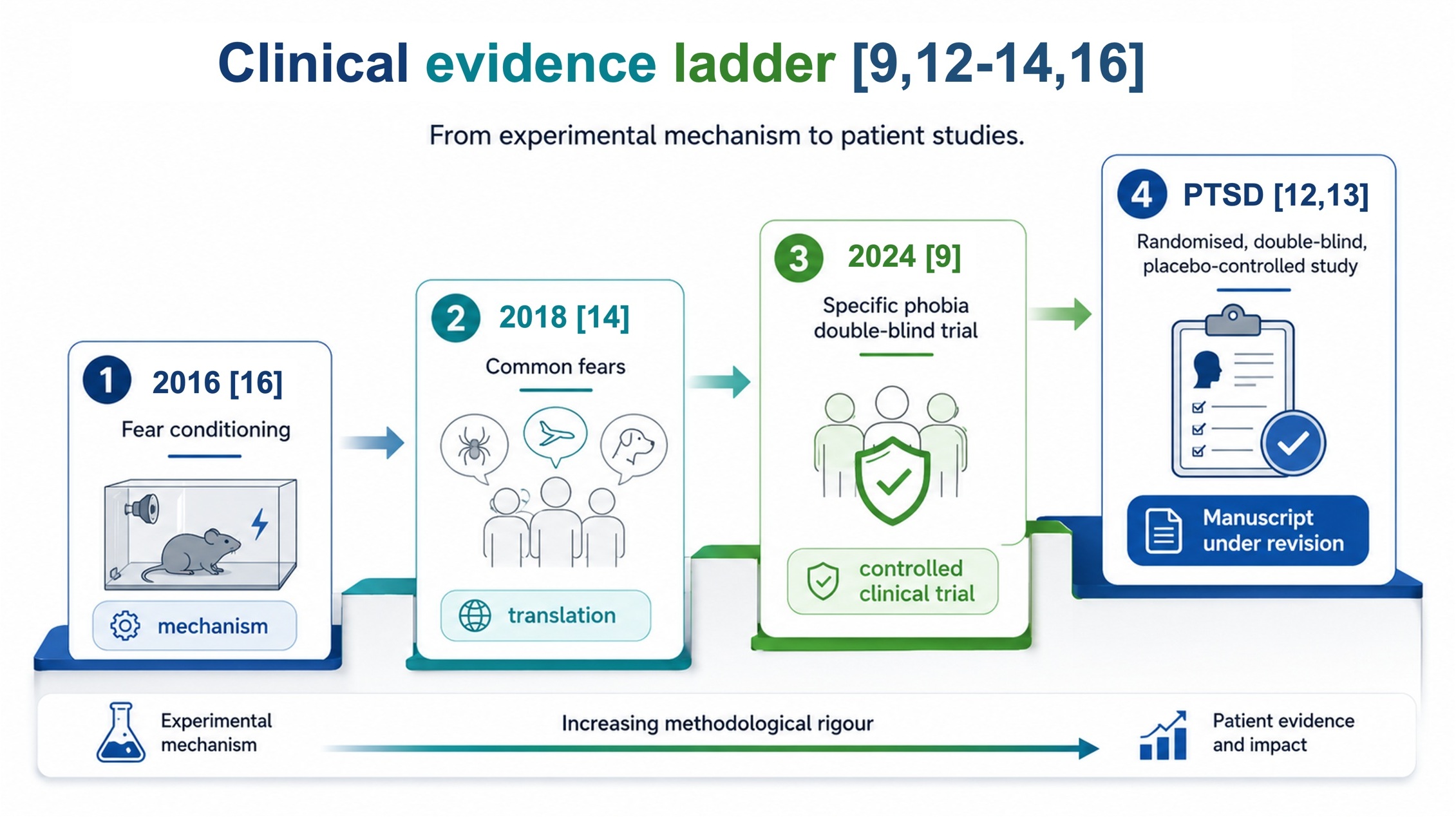
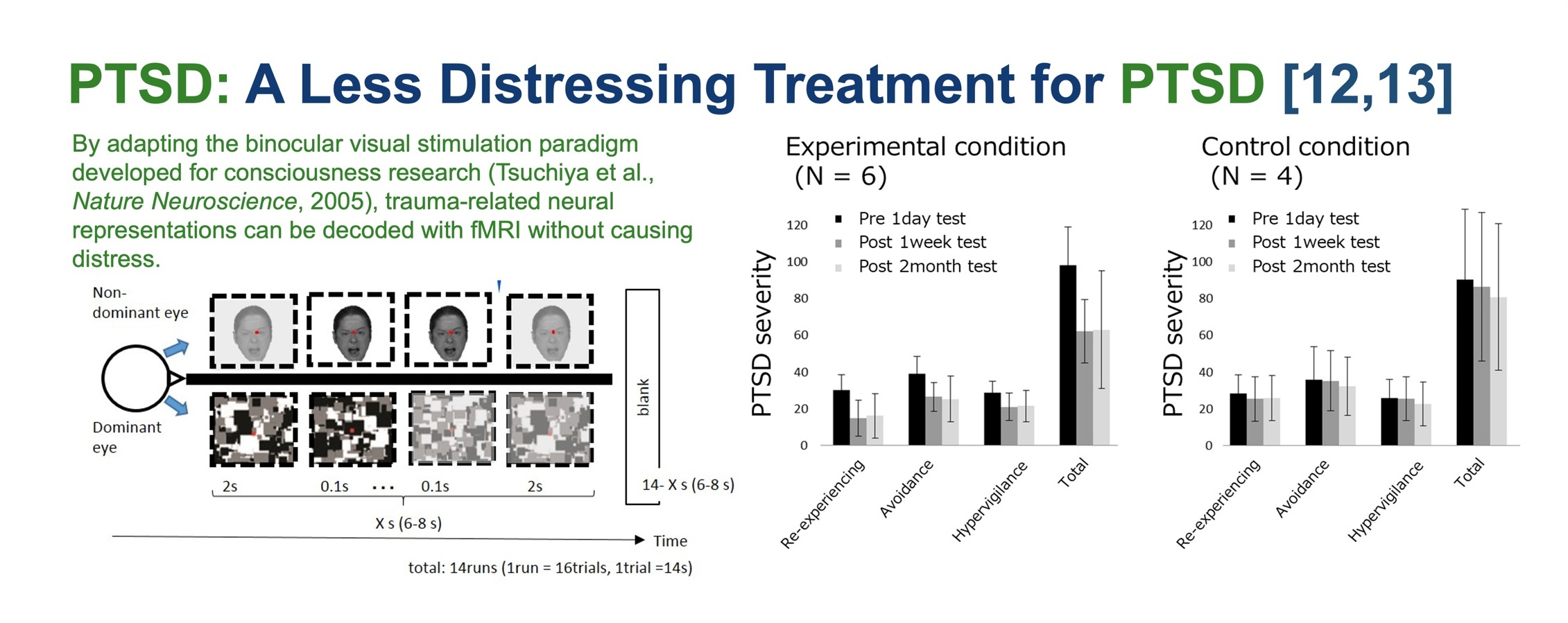
Exposure-based therapies can be effective, but repeated conscious engagement with traumatic memories can be distressing and may contribute to treatment burden or dropout. DecNef offers a distinct approach by targeting trauma-related neural representations without requiring conscious re-exposure [9, 12-14, 16].
The evidence chain progressed from fear conditioning [16], through common fears and specific phobias [9,14], to a randomised, double-blind, placebo-controlled PTSD study [13]. Specifically, PTSD DecNef reduced CAPS (Clinician Administered PTSD Scale) by 30-40, much larger than minimal clinically important difference 10 [12,13].
3.2 Depression
From generalisable biomarkers to circuit-guided intervention
The programme developed a generalisable major-depression brain-network marker using multisite resting-state fMRI and sparse machine learning [4]. It then advanced from diagnosis toward stratification and intervention: circuit information has been used to identify biologically relevant subgroups, predict antidepressant response [6], and select FCNef targets [10].
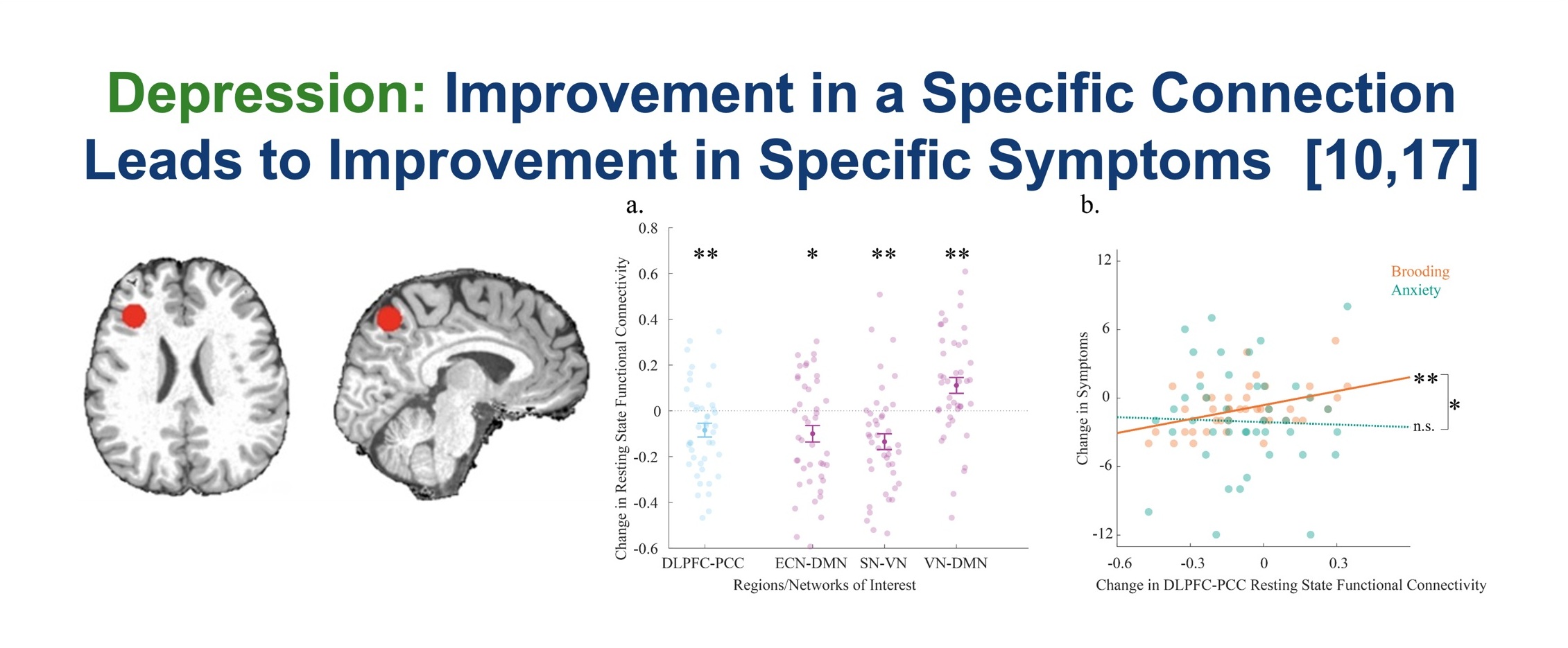
FCNef studies showed that normalisation of dorsolateral prefrontal cortex–precuneus connectivity was associated with reduced depressive symptoms and brooding [10]. Preliminary work in treatment-resistant depression further indicated that patients could learn to alter the target circuit, accompanied by symptom improvement [17].
3.3 Psychosis / schizophrenia
Circuit-level intervention for psychosis-relevant cognition
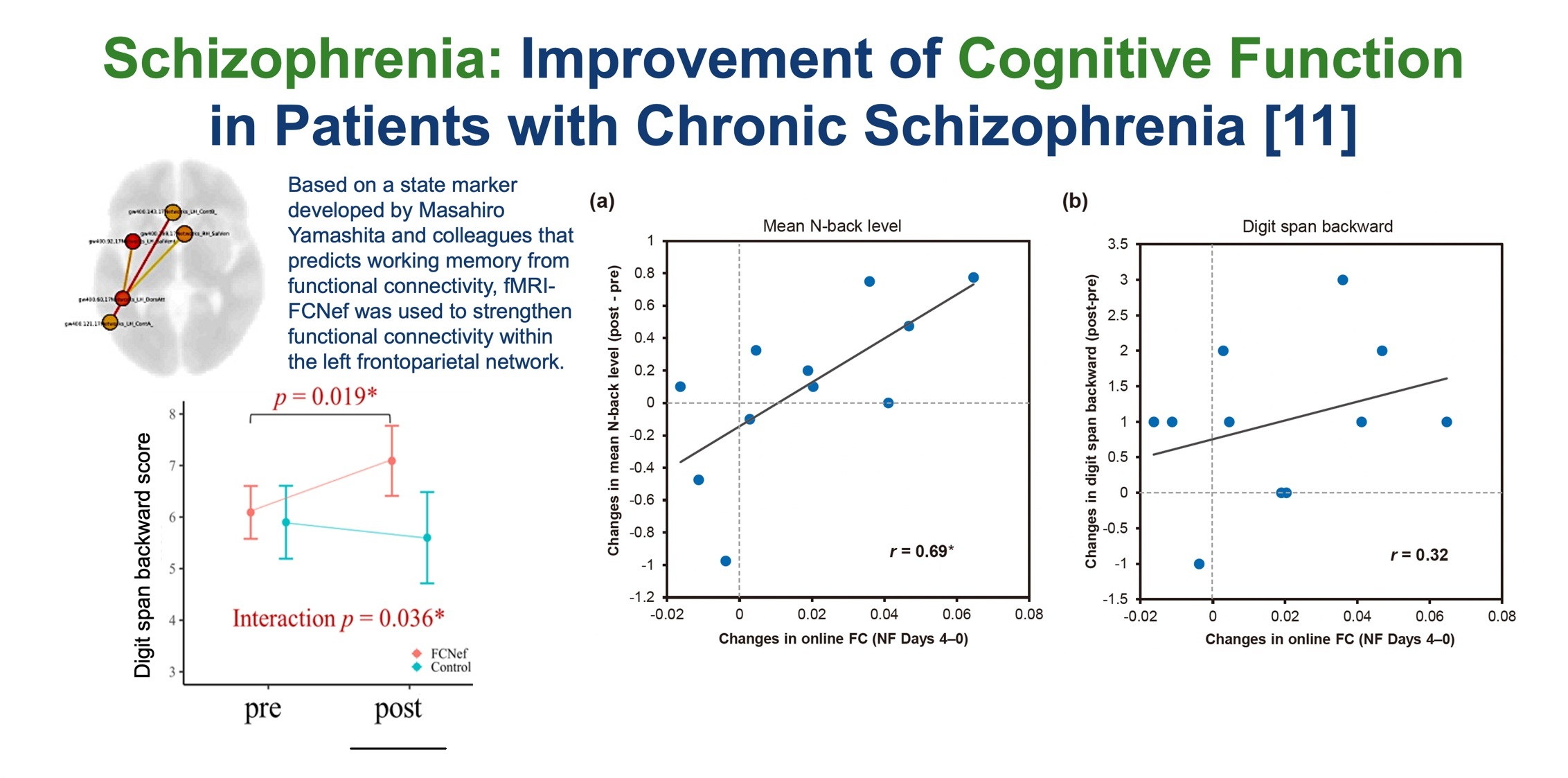
For psychosis, the strongest current intervention evidence concerns cognitive improvements in schizophrenia. Cognitive impairment in schizophrenia constitutes one of most urgent unmet medical needs in psychosis because neither medication or behavioral treatments is effective. FCNef targeting the left frontoparietal working-memory network improved working-memory performance, and the magnitude of circuit change was associated with cognitive improvement [11]. Working memory of the treated patients recovered to the level of healthy control participants. This directly supports the core claim that a biomarker-defined circuit can serve as an intervention target.
4. Multisite Generalisability as an Independent Scientific Achievement
Overcoming one of psychiatric neuroimaging’s central barriers
Many neuroimaging classifiers perform well in discovery data but fail in independent cohorts because scanner differences, sampling bias, protocol effects, and within-subject variability overwhelm disease-related signals [1-5].
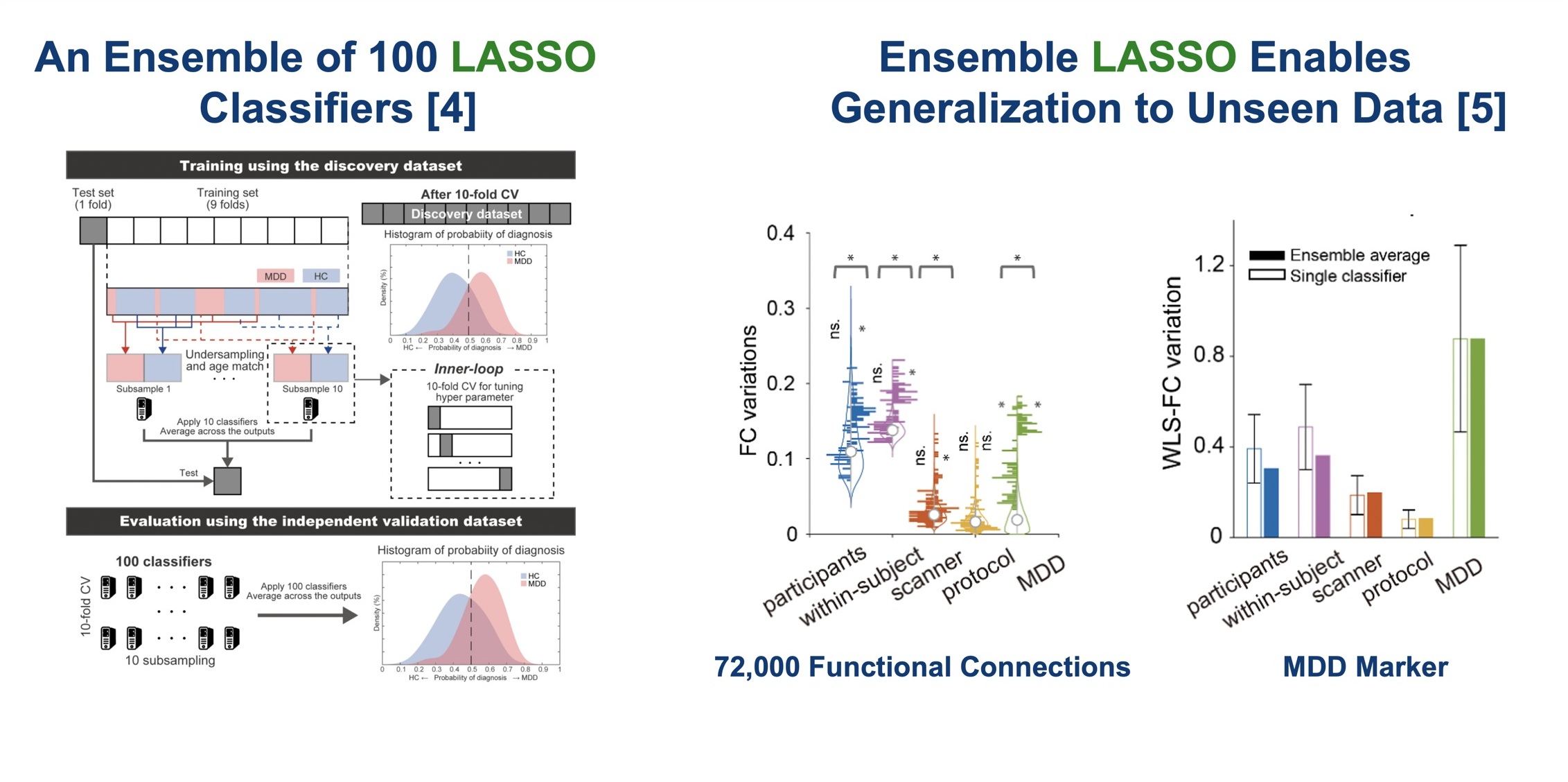
The team addressed this problem through large multisite datasets, travelling-subject measurements [3], statistical harmonization [3], sparse feature selection [1,4], and ensemble averaging [3-5]. The resulting major-depression marker maintained approximately 70% performance in independent multisite cohorts [4] and prospectively acquired patients [18]. Subsequent computational analysis explained how sparse selection and ensemble averaging improve the signal-to-noise ratio of the biomarker [5].
Randomised, double-blind, placebo-controlled; 3-day intervention; aggregate CAPS data
Preliminary report published and manuscript under second revision
FCNef
Depression
Circuit normalisation, symptom and brooding change, treatment-resistant pilot
Peer-reviewed pilot evidence
FCNef
Schizophrenia
Frontoparietal circuit strengthening and working-memory improvement
Peer-reviewed pilot evidence
Brain-circuit marker
Major depression
Independent multisite and prospective generalisation
Peer-reviewed; first-stage PMDA approval
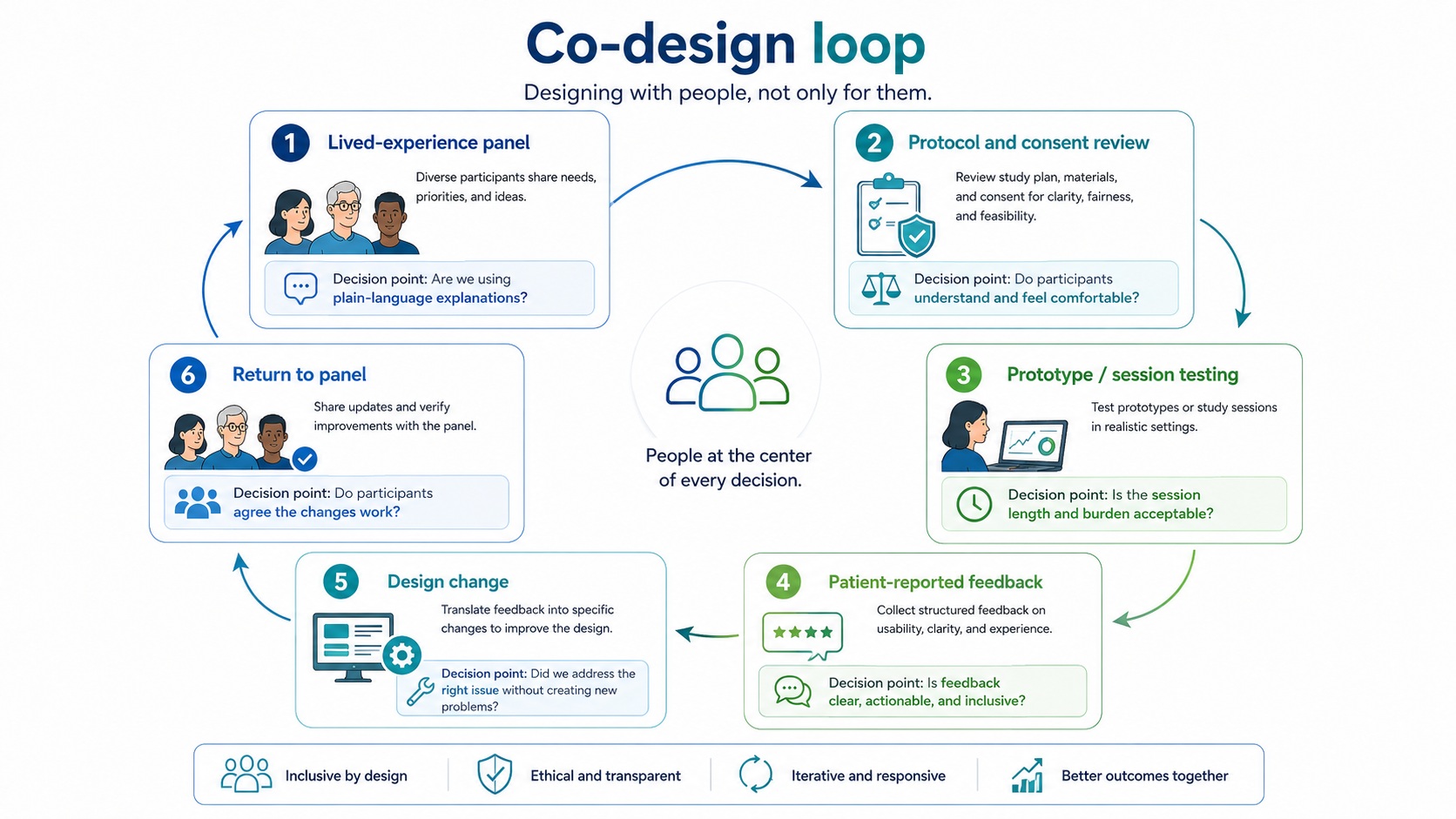
6. Lived Experience & Co-design
Meaningful progress in mental health care requires more than scientific innovation. It requires continuous dialogue with people who live with mental health conditions, their families and care communities.
XNef and ATR engage with patient communities through educational programmes, public lectures and dialogue events focused on the future of brain-circuit-based mental healthcare. For example, a public lecture hosted by the Nautilus Association addressed why bipolar disorder diagnosis is difficult and discussed clinical experience, neuroimaging research and AI-supported diagnostic perspectives with people with lived experience, family members, supporters and related participants.
In addition to open dialogue, PTSD patient feedback for DecNef treatment has been collected through structured questionnaires and engagement activities. Individual responses and detailed survey results are confidential and should not be publicly disclosed. Aggregated insights have been used internally to improve communication strategies, improve neurofeedback designs, identify unmet needs and inform future translational research priorities.
7. Global Adoption & Real-World Impact
A continuous path from fMRI precision to EEG accessibility
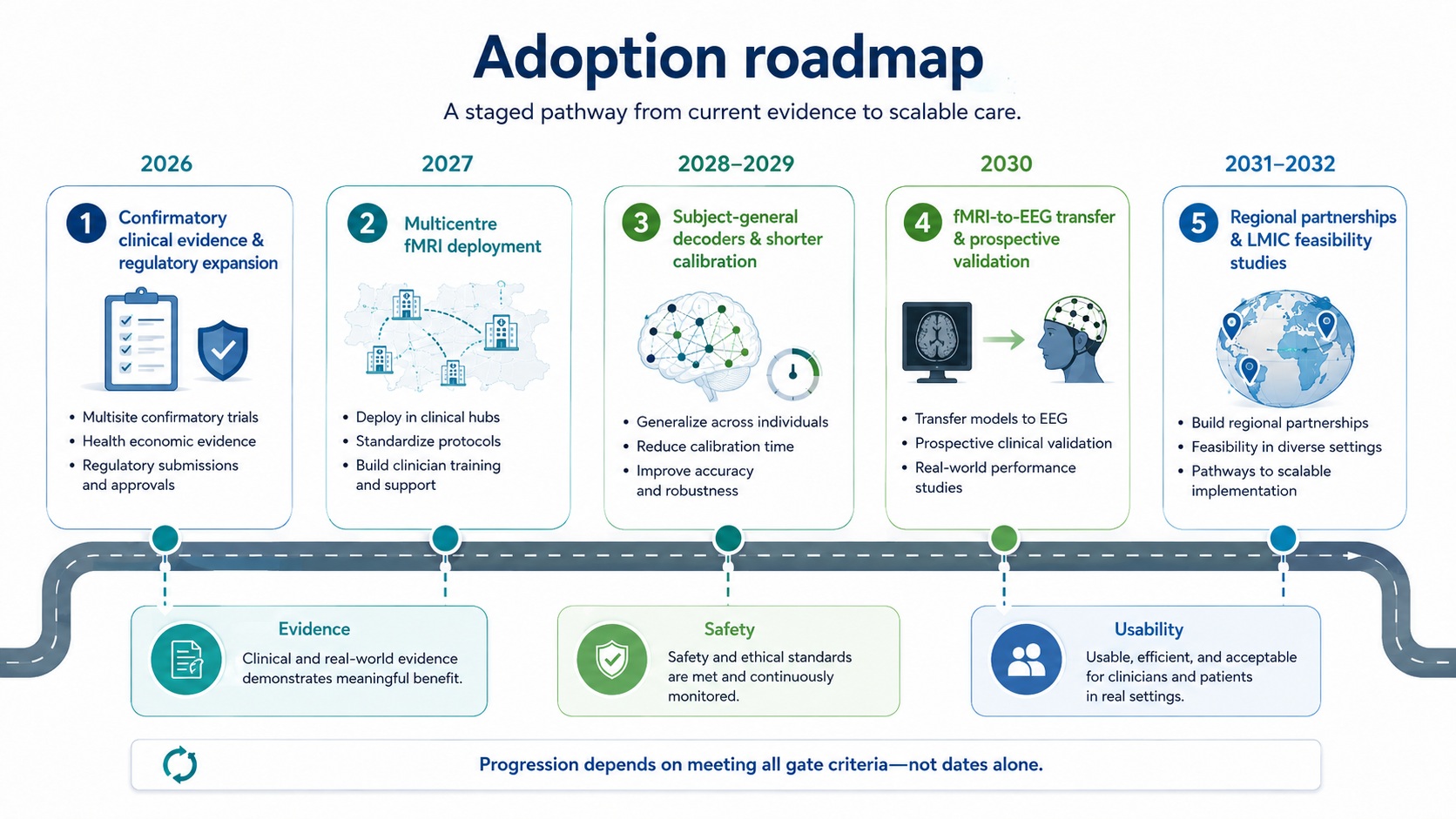
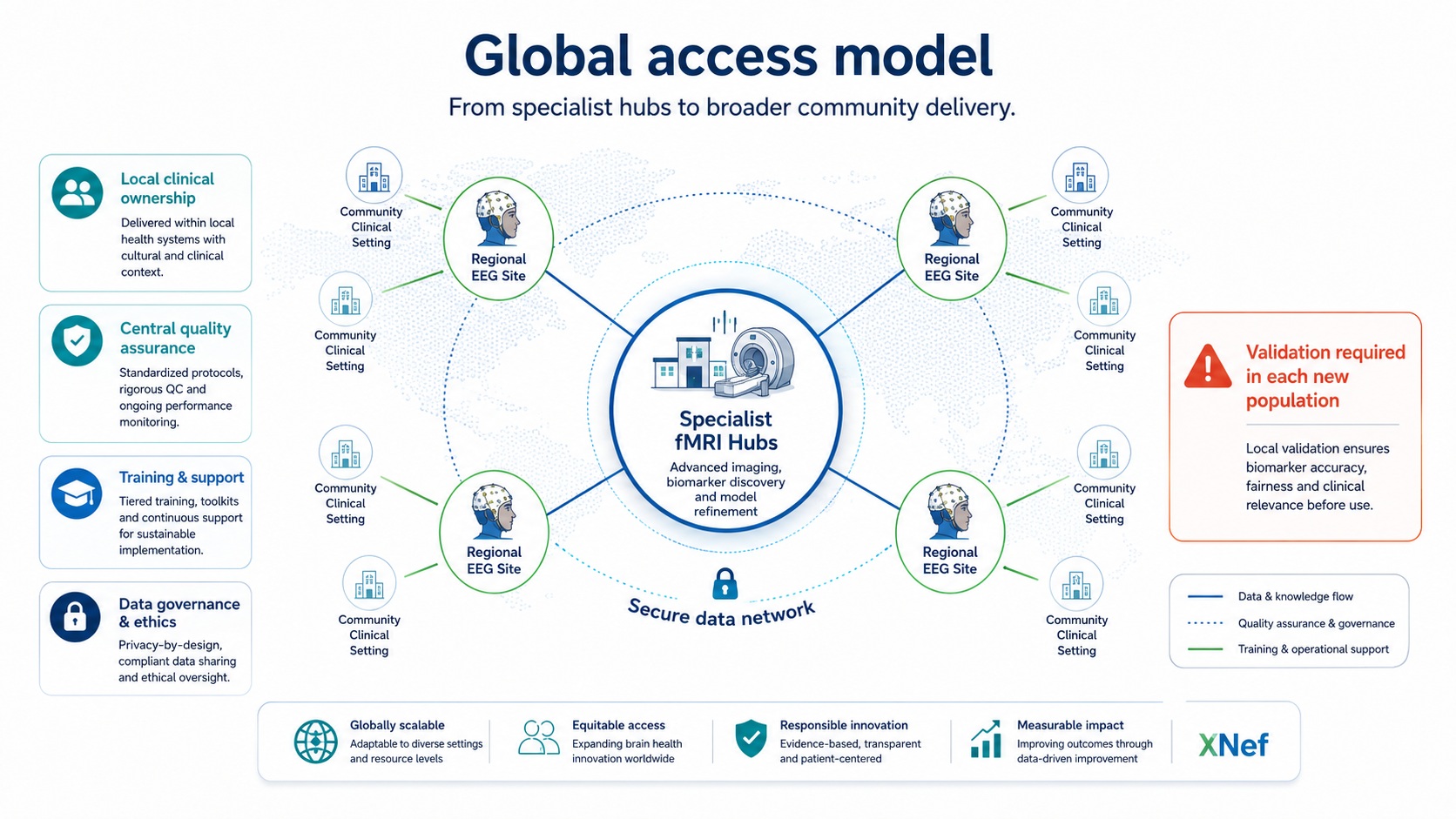
fMRI remains the discovery, calibration, and high-spatial-precision platform. EEG is the scaling modality to which validated fMRI-defined circuit targets and decoding models will be transferred and prospectively tested.
The immediate path is deployment of validated fMRI-based tools in specialist clinical centres using standardised protocols, statistical harmonisation, and central quality assurance. The intermediate path is development of subject-general DecNef decoders and reduced calibration. The longer-term path is fMRI-to-EEG transfer, prospective validation, and regional delivery through trained clinical partners.
8. What Success Would Change
Success would mean that care is informed not only by a diagnostic label, but by the brain circuit linked to symptoms, cognition, and treatment response. It would provide additional options for people who do not respond to medication, reduce reliance on distressing exposure for trauma-related conditions, and create a validated pathway from specialist precision neuroimaging to more accessible non-invasive treatment.
9. Team, Governance and Translation
Through four generations of funding supported by Ministry of Education, Culture, Sports, Science and Technology, and AMED, many neuropsychiatry groups collaborated in establishing the world largest fMRI database of patients with most imaging sites, and most disorder numbers [19-21]. Mitsuo Kawato, PhD, has led the development of computational neuroscience, brain decoding, DecNef, FCNef, and brain-circuit biomarkers at ATR. He founded XNef in 2017 to translate these discoveries into regulated medical technologies. The programme combines neuroscience, psychiatry, machine learning, radiology, clinical trials, quality systems, regulation, and international collaboration.
Clinical governance will separate exploratory research claims from validated clinical use. Each public result should identify the study design, sample size, peer-review status, and regulatory status. Algorithms should be evaluated for transportability, demographic performance, test–retest reliability, and clinically meaningful benefit.
10. References
Yahata N, Morimoto J, Hashimoto R, Lisi G, Shibata K, Kawakubo Y, Kuwabara H, Kuroda M, Yamada T, Megumi F, Imamizu H, Nanez JE, Takahashi H, Okamoto Y, Kasai K, Kato N, Sasaki Y, Watanabe T, Kawato M. A small number of abnormal brain connections predicts adult autism spectrum disorder, Nature Communications, 7:11254. doi:10.1038/ncomms11254 (2016).
Yahata N, Kasai K, Kawato M. Computational neuroscience approach to biomarkers and treatments for mental disorders, Psychiatry and Clinical Neurosciences, 71:215–237 (2017).
Yamashita A, Yahata N, Itahashi T, et al. Harmonization of resting-state functional MRI data across multiple imaging sites, PLoS Biology, 17:e3000042 (2019).
Yamashita A, Sakai Y, Yamada T, et al. Generalizable Brain Network Markers of Major Depressive Disorder Across Multiple Imaging Sites, PLoS Biology, 18:e3000966 (2020).
Yamashita O, Yamashita A, Takahara Y, et al. Computational mechanisms of neuroimaging biomarkers uncovered by multicenter resting-state fMRI connectivity variation profile, Molecular Psychiatry, 30:5463–5474 (2025).
Kashiwagi Y, Tokuda T, Takahara Y, Masaki Y, Sakai Y, Yoshimoto J, Yamashita A, Yoshioka T, Ogawa K, Okada G, Okamoto Y, Kawato M, Yamashita O. Generalizable stratification based on thalamo-somatomotor functional connectivity predicts responses to antidepressants in patients with depression, Molecular Psychiatry, 31:270–281. doi:10.1038/s41380-025-03224-5 (2025).
Shibata K, Watanabe T, Sasaki Y, Kawato M. Perceptual Learning Incepted by Decoded fMRI Neurofeedback without Stimulus Presentation, Science, 334:1413–1415 (2011).
Megumi F, Yamashita A, Kawato M, Imamizu H. Functional MRI Neurofeedback Training on Connectivity between Two Regions Induces Long-lasting Changes in Intrinsic Functional Network, Frontiers in Human Neuroscience, 9:160 (2015).
Cushing CA, Lau H, Kawato M, Craske MG, Taschereau-Dumouchel V. A double-blind trial of decoded neurofeedback intervention for specific phobias, Psychiatry and Clinical Neurosciences, 78:678–686 (2024).
Taylor JE, Oka T, Murakami M, Motegi T, Yamada T, Kawashima T, Kobayashi Y, Yoshihara Y, Miyata J, Murai T, Kawato M, Cortese A. Paving the way for precision treatment of psychiatric symptoms with functional connectivity neurofeedback, Translational Psychiatry, 16:291. doi:10.1038/s41398-026-04040-3 (2026).
Kobayashi Y, Asai T, Yoshihara Y, et al. Enhancement of the Left Frontoparietal Network through Real-time fMRI Functional Connectivity-informed Neurofeedback and Its Impact on Working Memory in Schizophrenia, Psychiatry and Clinical Neurosciences, 79:531–544 (2025).
Chiba T, Kanazawa T, Koizumi A, Ide K, Taschereau-Dumouchel V, Boku S, Hishimoto A, Shirakawa M, Sora I, Lau H, Yoneda H, Kawato M. Current status of neurofeedback for post-traumatic stress disorder: a systematic review and the possibility of decoded neurofeedback, Frontiers in Human Neuroscience, 13:233. doi:10.3389/fnhum.2019.00233 (2019).
Chiba T, Ide K, Taylor JE, Cortese A, Kubo T, Nishida K, Boku S, Toda H, Shirakawa M, Amano K, Lau H, Kawato M, Seymour B, Koizumi A, Kanazawa T. PTSD Therapy with fMRI-decoded Neurofeedback Bypassing Conscious Exposure: A Randomized, Double-blind, Placebo-controlled Study, medRxiv, 25330779; doi: https://doi.org/10.1101/2025.07.07.25330779 (2025) Nature Communications, Under second revision (2026).
Taschereau-Dumouchel V, Cortese A, Chiba T, Knotts JD, Kawato M, Lau H. Towards an unconscious neural-reinforcement intervention for common fears, Proceedings of the National Academy of Sciences USA, 115(13):3470–3475 (2018).
Kawato M. From “Understanding the Brain by Creating the Brain” towards Manipulative Neuroscience, Philosophical Transactions of the Royal Society B, 363:2201–2214 (2008).
Koizumi A, Amano K, Cortese A, et al. Fear reduction without fear through reinforcement of neural activity that bypasses conscious exposure, Nature Human Behaviour, 1:0006 (2016).
Takamura M, Okada G, Kamishikiryo T, Itai E, Kato M, Motegi T, Taylor JE, Yoshioka T, Kawato M, Okamoto Y. Application of functional connectivity neurofeedback to patients with treatment-resistant depression: a preliminary report, Journal of Affective Disorders Reports, 14:100644 (2023).
Okada G, Yoshioka T, Yamashita A, Itai E, Yokoyama S, Kamishikiryo T, Shinzato H, Masuda Y, Mitsuyama Y, Kan S, Kurata A, Takamura M, Yoshino A, Mantani A, Yamamoto O, Yokota N, Tamura T, Jitsuiki H, Kawato M, Yamashita O, Sakai Y, Okamoto Y. Verification of the brain network marker of major depressive disorder: test-retest reliability and anterograde generalization performance for newly acquired data, Journal of Affective Disorders, 326:262–266 (2023).
Tanaka SC, Yamashita A, Yahata N, Itahashi T, Lisi G, Yamada T, Ichikawa N, Takamura M, Yoshihara Y, Kunimatsu A, Okada N, Hashimoto R, Okada G, Sakai Y, Morimoto J, Narumoto J, Shimada Y, Mano H, Yoshida W, Seymour B, Shimizu T, Hosomi K, Saitoh Y, Kasai K, Kato N, Takahashi H, Okamoto Y, Yamashita O, Kawato M, Imamizu H : A multi-site, multi-disorder resting-state magnetic resonance image database, Scientific Data, 8(227), https://doi.org/10.1038/s41597-021-01004-8 (2021)
Koike S, Tanaka SC, Okada T, Aso T, Yamashita A, Yamashita O, Asano M, Maikusa N, Morita K, Okada N, Fukunaga M, Uematsu A, Togo H, Miyazaki A, Murata K, Urushibata Y, Autio J, Ose T, Yoshimoto J, Araki T, Glasser MF, Van Essen DC, Maruyama M, Sadato N, Kawato M, Kasai K, Okamoto Y, Hanakawa T, Hayashi T, Brain/MINDS Beyond Human Brain MRI Group: Brain/MINDS beyond human brain MRI project: a protocol for multi-level harmonization across brain disorders throughout the lifespan, Neuroimage: Clinical, https://doi.org/10.1016/j.nicl.2021.102600 (2021)
Tanaka SC, Kasai K, Okamoto Y, Koike S, Hayashi T, Yamashita A, Yamashita O, Johnstone T, Pestilli F, Doya K, Okada G, Shinzato H, Itai E, Takahara Y, Takamiya A, Nakamura M, Itahashi T, Aoki R, Koizumi Y, Shimizu M, Miyata J, Son S, Aki M, Okada N, Morita S, Sawamoto N, Abe M, Oi Y, Sajima K, Kamagata K, Hirose M, Aoshima Y, Hamatani S, Nohara N, Funaba M, Noda T, Inoue K, Hirano J, Mimura M, Takahashi H, Hattori N, Sekiguchi A, Kawato M, Hanakawa T: The status of MRI databases across the world focused on psychiatric and neurological disorders, Psychiatry and Clinical Neuroscience, 78(10):563-579 doi: https://doi.org/10.1111/pcn.13717 (2024)